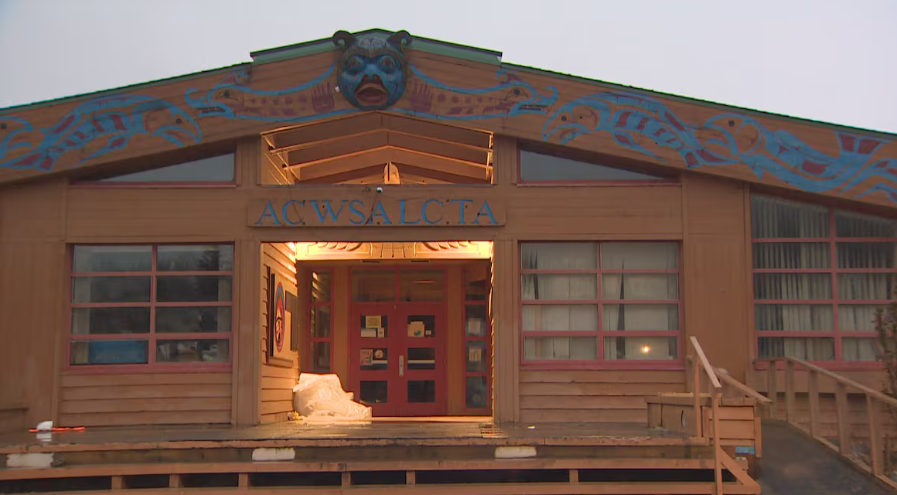
The B.C. Conservation Officer Service (BCCOS) has officially ended its search for the grizzly responsible for the Nov. 20 attack on a group of school children and a teacher near Bella Coola, British Columbia. The announcement comes after extensive forensic testing ruled out all eight bears captured during the investigation.
Forensic Results Clear All Captured Bears
Over the last two weeks, conservation officers have captured eight grizzly bears, including a mother and three juveniles.
However, none were linked to the attack after forensic analysis.
All captured bears are now being relocated away from the community, and will be fitted with GPS collars to allow for ongoing monitoring.
With no new bear sightings and grizzlies entering denning season, the BCCOS confirmed that active trapping operations have ended and all equipment has been removed.
An update on the condition of the injured children and teacher has not yet been released.
Nuxalk Nation Emphasizes Long-Standing Co-Existence With Bears
The incident has deeply affected the Nuxalk Nation, whose members have lived alongside grizzlies for generations.
Many in the community stress that the event is highly unusual and not reflective of typical bear behaviour.
Jason Moody, father of one of the injured children and Nuxalk fisheries and wildlife planning coordinator, explained:
“We’ve lived alongside them for thousands of years. Our relationship is one of respect, and they’re revered and honoured.”
Community members say the school group was well-trained in bear safety, adding to the unexpected nature of the attack.
Debate Over Grizzly Hunt Ban Resurfaces — But Experts See No Link
The attack has prompted some groups to renew debate on lifting B.C.’s grizzly hunting ban.
However, conservationists and the Nuxalk Nation emphasize that there is no evidence connecting the hunting moratorium to the incident.
Food scarcity is believed to be a more significant factor.
Moody notes that when food is abundant, bears are less stressed and co-exist more easily with people.
“The bears have been stressed when the food is not available.”
Large-Scale Search Effort Involved 24 Officers
The BCCOS deployed 24 officers, working in rotating shifts, who:
-
Conducted extensive patrols
-
Set up traps throughout the region
-
Transported collected samples across hundreds of kilometres for forensic testing
-
Worked closely with the University of Alberta laboratory
Residents were urged to avoid travelling alone during the search, and volunteer rides were offered to ensure community safety.
A Nuxalk Nation information session held Thursday drew more than 100 attendees, though details remain private out of respect for those affected.
Next Steps: Co-existence and Long-Term Safety Plans
The BCCOS has confirmed that an officer will remain posted in the community full-time as part of an expanded co-existence strategy.
Both the Nation and conservation officials agree that collaborative efforts will be crucial moving forward.
“A lot of people are wondering, where do we go from here?” Moody said. “We have a lot of work ahead of us.”